When one sink drains slowly, that is annoying. When you flush the toilet and dirty water starts rising in the tub, that is a different level of problem entirely.
A main sewer line blockage is not just a plumbing inconvenience. It can turn into a messy, unsanitary backup that affects multiple drains in your home at the same time. The longer it goes unchecked, the more likely it is to spill wastewater where it does not belong.
The most common main sewer line clog signs are multiple drains clogged at once, water backing up in the shower or tub when the toilet flushes, gurgling sounds from drains, sewage odors, and wastewater showing up near the sewer cleanout or floor drain.
If you are seeing any of those sewer backup signs, stop using water right away. Running the dishwasher, washing machine, shower, or even another toilet can force even more wastewater back into your home.
Need help fast? AYS Plumbing & Rooter provides drain cleaning, sewer and drain camera inspection, hydro jetting, sewer repair, and emergency plumbing service in Upland and surrounding areas. Call (909) 316-3535 to schedule service.
How to Tell if It Is a Local Clog or a Main Line Clog
A local clog usually affects one fixture.
For example, if only the guest bathroom sink is slow, the blockage is probably close to that sink. Hair, soap scum, toothpaste, or other buildup may be sitting in that one drain line.
A main line clog is different. Your home’s drains all feed into one larger sewer line that carries wastewater away from the house. If that main line is blocked, the whole system starts struggling. That is when you may notice multiple drains clogged, strange bubbling, or water backing up in places that do not seem connected.
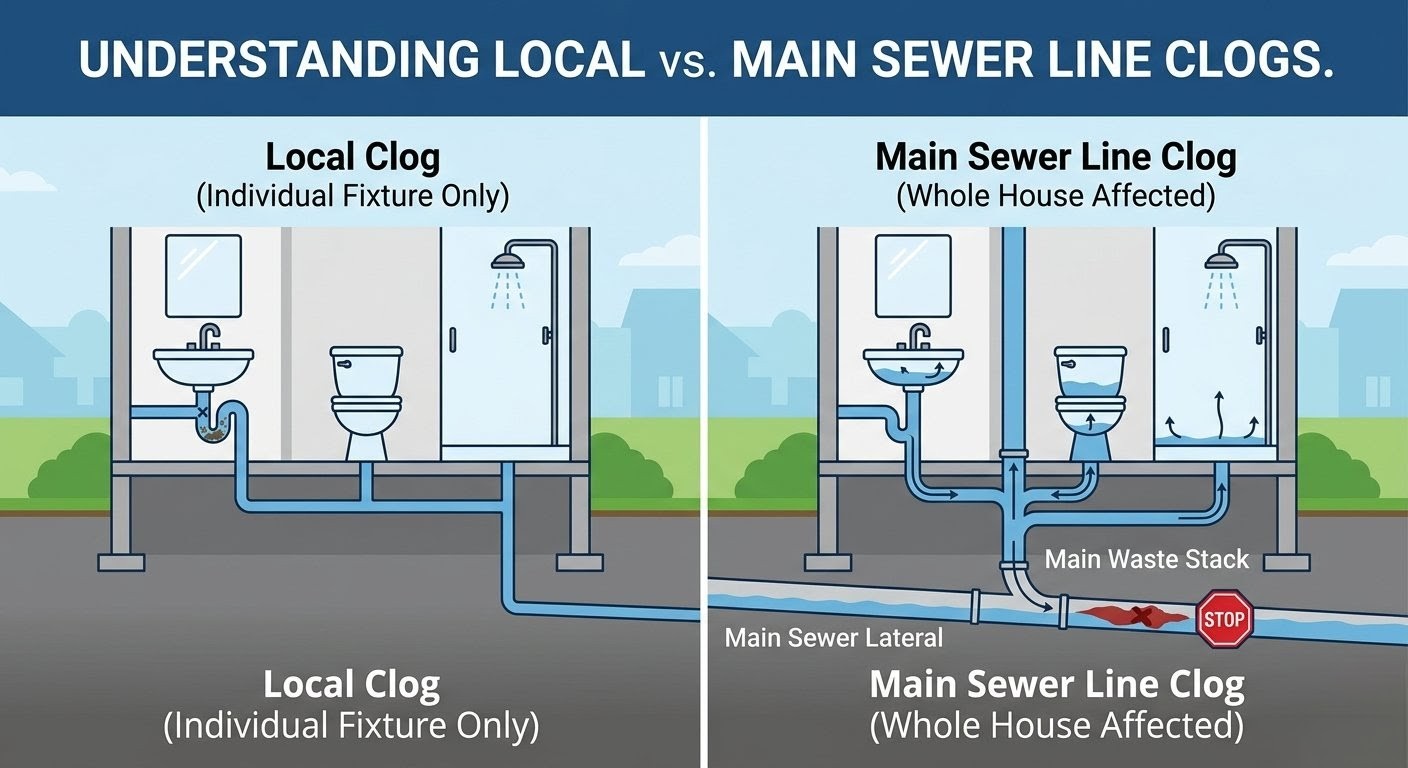
That distinction matters because a plunger or a simple hand snake might help with a local clog. It will not solve a main sewer line blockage deeper in the system.
5 Red- Alert Signs of a Main Sewer Line Blockage
1. Multiple drains are clogged or draining slowly
This is one of the biggest warning signs.
If the shower is slow, the toilet is acting up, and the bathroom sink is draining poorly around the same time, that usually points to a larger issue than one isolated clog. In many homes, the lowest fixtures show symptoms first, especially tubs, showers, or floor drains.
A single slow drain can be a simple blockage. Multiple drains clogged at once usually means the main sewer line needs attention.
2. Water backs up in the tub or shower when you flush the toilet
This is the classic red flag homeowners describe.
You flush the toilet, and instead of everything flowing out the way it should, water bubbles or backs up in the nearby shower or bathtub. Sometimes the reverse happens too. You run the washing machine, and the toilet starts acting strange.
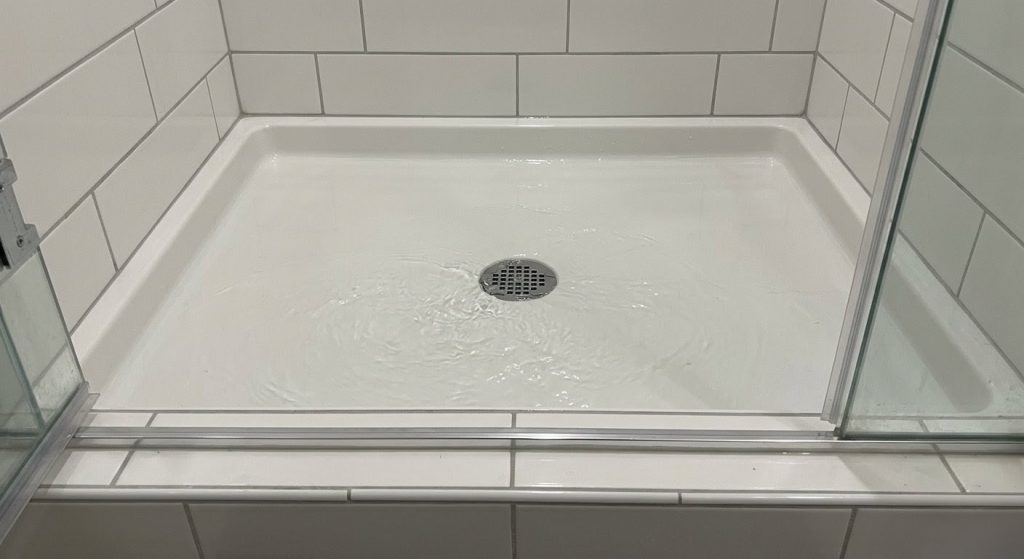
That happens because the wastewater cannot move out through the main sewer line, so it looks for the next easiest place to go. Often, that is the lowest drain nearby.
If you see this, do not keep testing it. That usually makes the problem worse.
3. You hear gurgling or bubbling sounds from drains
Your plumbing should not sound like it is trying to talk to you.
Gurgling noises usually mean trapped air is being forced back through the drains because the line is partially blocked. You might hear it after flushing the toilet, running a sink, or draining a tub.
This can show up before a full backup happens, which makes it one of the more useful early sewer backup signs. It is your home’s way of saying the system is struggling to breathe and drain normally.
4. There is a sewer smell inside or outside
A main sewer line problem often comes with an unmistakable smell.
If you notice an odor that smells like sewage near drains, in the bathroom, around a floor drain, or outside near the yard, do not ignore it. That smell can mean wastewater is sitting in the line instead of moving out properly.
Sometimes homeowners notice the smell before they see actual backup. Other times, the smell comes right along with slow drains and bubbling fixtures.
Either way, a persistent sewer odor is not something to brush off and hope disappears.
5. Sewage shows up at the cleanout, floor drain, or yard
This is one of the most serious signs.
If your home has a sewer cleanout outside and you see water or sewage around it, the line may be blocked.
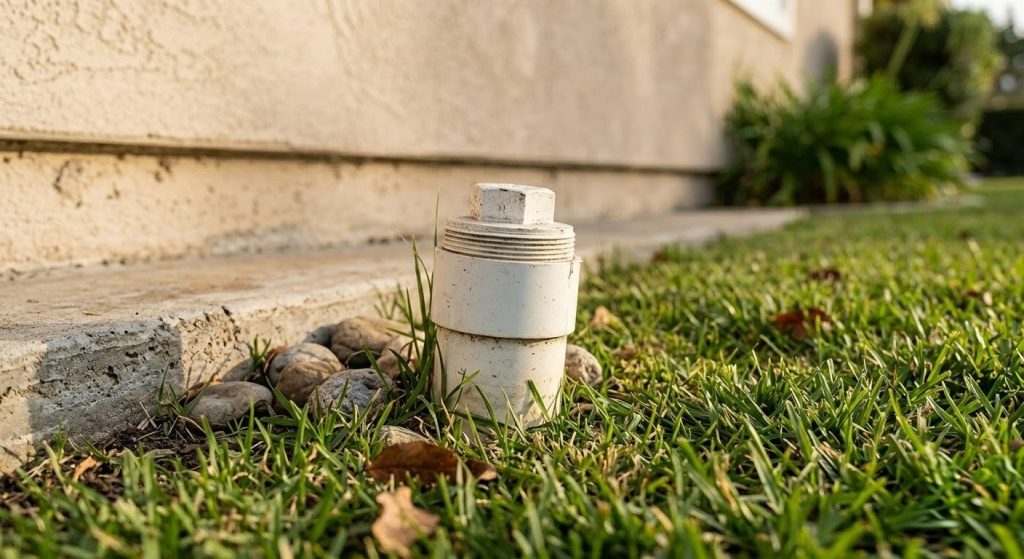
In some homes, the first visible backup happens at a basement floor drain or another low drain in the house. In more severe cases, you may even notice wet spots or foul-smelling pooling in the yard.
At that point, this is no longer a wait and see problem. It needs professional attention as quickly as possible.
What Causes a Main Sewer Line to Clog?
A main sewer line blockage can happen for a few different reasons.
Some of the most common include:
- Tree root intrusion: Roots can grow into tiny cracks or joints in underground sewer pipes and keep expanding over time.
- Grease and debris buildup: Grease, sludge, wipes, paper towels, and hygiene products can collect and create a stubborn blockage.
- Pipe damage or collapse: Older or damaged sewer lines can crack, sag, shift, or partially collapse, which restricts flow and traps waste.
Sometimes the problem is buildup that can be cleared. Sometimes it is a damaged line that needs repair. That is why guessing is risky.
What to Do Next And What Not to Do
If you think you have a main sewer line blockage, the best first step is simple:
Stop using water.
Do not keep flushing toilets. Do not run the shower. Do not start the washing machine or dishwasher. Every bit of water you send into the system has fewer places to go, and that can turn a warning sign into a real backup on your floors.
It is also smart to avoid reaching for chemical drain cleaners. In a main line situation, they usually do not solve the real problem, and they can make the situation more hazardous for anyone working on the line afterward.
What you do want is a clear diagnosis.
A sewer and drain camera inspection lets a plumber see what is actually happening inside the line. From there, the right solution may be professional drain cleaning, hydro jetting to clear heavy buildup, or sewer repair if the pipe is damaged.
AYS Plumbing & Rooter offers sewer and drain camera inspections, hydro jetting, sewer repair, and emergency plumbing service in Upland and nearby areas. If you are seeing main sewer line clog signs, call (909) 316-3535 or request an appointment online before a bad backup becomes a much bigger mess.